




A unique UK charity marks a remarkable achievement today – the provision of aid for half a million disaster victims worldwide.
Tucked away in a small Cornish town, ShelterBox has grown in just seven years from being a small volunteer-run charity to one of the world’s most dynamic and effective aid agencies.
The charity, set up by a local Rotary club in 2000, specialises in providing emergency accommodation and other survival essentials to disaster victims. The aid is delivered in pre-packaged kits – the ‘ShelterBox’ – each designed to help a family of 10 survive for at least six months.
Tomorrow (Wednesday 8th August), the charity is packing 200 ShelterBoxes to go to help victims of the monsoon floods in Nepal – and the family receiving one of those boxes will bring the total helped by the charity to 500,000.
ShelterBox founder and chief executive Tom Henderson said:"Since we began operations in January 2001, ShelterBox has worked in 33 countries worldwide and we’ve responded to more than 50 different emergencies, from floods to earthquakes and wars to hurricanes.
"Our boxes and the tents they contain have delivered new hope to families around the world who have seen their homes and communities utterly destroyed. That achievement has only been possible due to the generosity of the UK public and those people around the world who have supported our work."
The ShelterBox concept was the brainchild of Henderson, an ex-Royal Navy search-and-rescue diver and marine consultant. His idea was adopted by the Rotary Club of Helston – Lizard in 2000 and the first boxes sent to India in January 2001 following a massive earthquake in Gujarat.
Over the next few years, the charity operated on a relatively modest scale and by the end of 2004 had provided aid for around 25,000 people. Based on its previous achievements, ShelterBox had predicted an income of up to £500,000 in 2004-05 and sending out 900 boxes during the year.
But then, said Henderson, the Boxing Day Tsunami happened:"Everything changed. The public response was just staggering. We had people queuing outside our building to give money and we ended up sending out aid worth more than £6 million in response to the tsunami alone."
In total, ShelterBox provided help for around 225,000 people in tsunami-hit countries and the scale of the charity’s operations was transformed in a matter of months.
Now, although still supported by an extensive volunteer network,the charity has a core professional staff and prides itself on the quality of the aid it provides – help that during 2007 alone has been sent to victims of disasters in Kenya, Bolivia, the Solomons,Pakistan and now Nepal.
Tom Henderson added: "Our motto is to do the most for those in most need. We select the contents of our boxes very carefully and we will only send material that is both suitable for the conditions and capable of serving its purpose for at least six months.
"We believe we set a benchmark for aid operations and the quality of what we do can be demonstrated by the fact that the UN has previously asked for 10,000 of our boxes for Sudan alone."
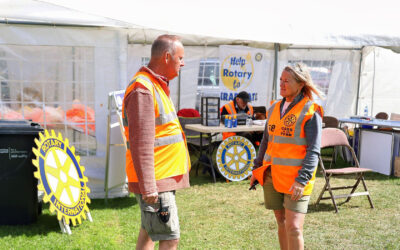
The link with the worldwide Rotary network has also proved a vital asset in the ShelterBox success story. Not only have Rotary clubs donated about half of the £15 million raised to date but they also provide a valuable support and information network when the charity sends its volunteer teams into the field to deliver aid.
07/08/07