
The Global Polio Eradication Initiative announced today, (Friday 28th March) that Somalia is now polio free, calling it an ‘historic achievement’ in public health.
Somalia has not reported a case since 25 March 2007, a major landmark in the intensified eradication effort launched last year by The Global Polio Eradication Initiative, a partnership between World Health Organisation, Rotary International, the US Centers for Disease Control and Prevention and UNICEF, to wipe out the disease in the remaining few strongholds.
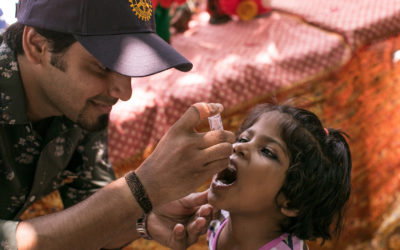
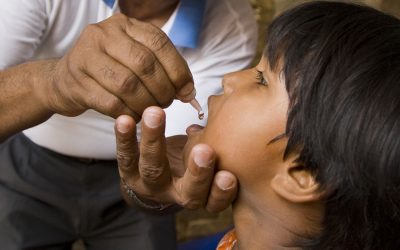
Against a backdrop of widespread conflict, large population movements and a dearth of functioning government infrastructure, transmission of poliovirus in the country has been successfully stopped. This landmark victory is a result of the efforts of more than 10,000 Somali volunteers and health workers who repeatedly vaccinated more than 1.8 million children under the age of five by visiting every household in every settlement multiple times, across a country which is one of the most dangerous places on earth.
The use of innovative approaches tailored to conflict areas was pivotal in stopping polio in the country. These included increased community involvement and the effective use of monovalent vaccines to immunize children in insecure areas with several doses, within a short period of time.
"This truly historic achievement shows that polio can be eradicated everywhere, even in the most challenging and difficult settings," said Dr Hussein A Gezairy, Regional Director for the World Health Organization’s Office for the Eastern Mediterranean.
"Somalia beat polio in the midst of more widespread conflict and poverty than that affecting Afghanistan and Pakistan," according to Dr Maritel Costales, Senior Health Advisor, UNICEF New York, citing insecurity and large population movements in those countries as challenges to reaching all children with vaccine. "But Somalia shows that when communities are engaged, children everywhere can be reached." Afghanistan and Pakistan could be the first of the remaining endemic countries to stop polio; between them they account for 5% of all cases of polioin 2007.
Consistent financial commitment continues to be crucial to completing polio eradication. The global effort currently faces a shortage of £283 million (US$525 million) for 2008-2009, funding urgently needed to fight the disease in the remaining endemic areas and protect children in high-risk polio-free areas. Rotary International, the top private sector contributor and volunteer arm of the GPEI, has contributed £5 million (US$9.2million) for polio eradication in Somalia, and £377 million (US$700 million) worldwide since 1985.
"Somalia clearly showsthat the tailored tools and tactics of the intensified eradication effort are working," commented Mohamed Benmejdoub, Chair ofRotary’s Eastern Mediterranean PolioPlus Committee. "A polio-free world is a feasible public health goal and a global public good. I urge governments across the world – and in particular the G8 countries – to rapidly make available the necessary resources. Together, we can ensure that no child need ever again suffer the terrible pain of lifelong polio-paralysis."
Polio, which can cause lifelong paralysis, has been stopped nearly everywhere in the world following a 20-year concerted international effort. Only four polio-endemic countries [1] remain- Afghanistan, India, Nigeria and Pakistan – and the eradication of polio globally now depends primarily on stopping the disease in these countries.
Poliovirus travels easily and, in the world of modern travel, can cover long distances. Until transmission of the virus has been interrupted in the four remaining endemic countries, the risk tothe rest of the world remains high. Somalia, which had already eradicated the disease in 2002, became re-infected in 2005 by poliovirus originating in Nigeria. This repeated success in Somalia indicates the disease can be stopped even in areas with nofunctioning central government
31/03/08